
Our Story
Throughout its history the Episcopal Church of South Sudan has been at the forefront of education and peacebuilding, running primary and secondary schools across the country over many decades and playing an active part in the nation’s peacebuilding efforts, initially in the conflict between north and south, and now in the internal tribal conflicts that continue to plague the nation. Today the Episcopal Church runs 288 primary schools, 12 secondary schools and 12 colleges.
The Episcopal Church of South Sudan has had a vision to establish an Episcopal University for many decades. In 2011 A feasibility study commissioned by Archbishop Daniel Deng Bul demonstrated the need and desire for a multicampus university with a strong Christian foundation that builds on the Church’s existing theological and other further education colleges located in different parts of the country. The Episcopal University of South Sudan is the embodiment of this vision as a Christian foundation private university in South Sudan.
The church has always understood education as a vital means for developing people who contribute to the flourishing of a peaceful and prosperous society and the building up of the God’s people. Underlying the existence of the university is the belief that everyone has a God-given vocation – as lawyers, pastors, teachers, parents, medical professionals, social workers, community workers, peacebuilders, engineers or artists. Over time, the Episcopal University seeks to expand the range of subjects it offers, so that through its degree programmes it will produce holistically educated servant leaders in a variety of vocations for South Sudan and beyond.
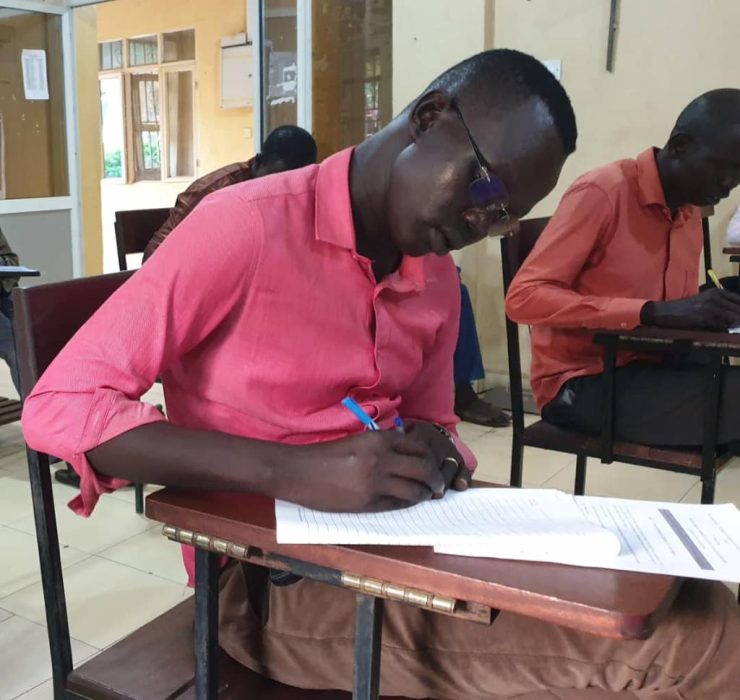
The university currently consists of the Bishop Gwynne School of Theology (formerly Bishop Gwynne College), the School of Law and the School of Business and Management in Juba. Existing colleges in Kajo Keji, Maridi, Renk, Yei and Wau are affiliated with the university and will also offer accredited programmes in the near future. In total, these colleges employ approximately 40 full-time staff and serve over 700 students
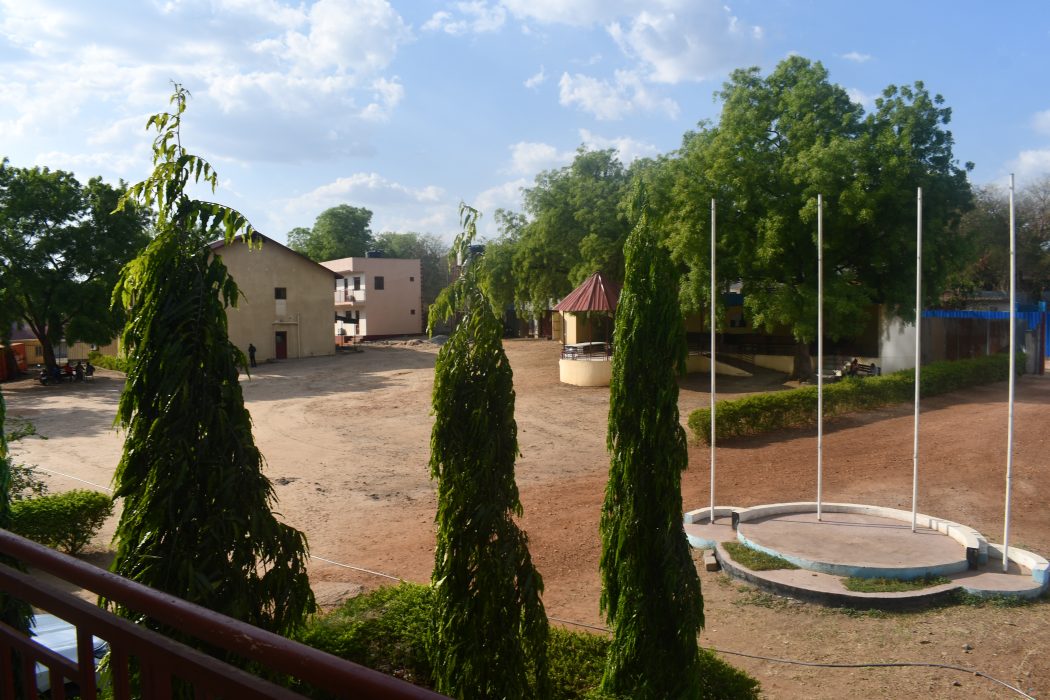
The university is located on a small campus in the centre of Juba, the country’s capital. This houses the university’s administrative offices, the Bishop Gwynne School of Theology, the School of Law and the School of Business and Management. A large (12 km2) site has been acquired 50 miles west of Juba, near Rokon. This will form the central hub of the university, housing the central administration as well as other faculties. Currently the land is being cultivated as part of a project to promote sustainable agriculture.
Vision, Mission and Values
Vision
TEU’s vision is to be a vibrant multi-campus University.
Mission
Our mission is to develop students holistically for professional leadership and service.
Objectives
- Creating attractive campuses that are conducive to higher education and inspire staff, students and visitors alike.
- Offering excellent teaching and learning.
- Providing resources that fulfil the requirements of a range of disciplines and extra-curricular activities.
- Offering a unified curriculum that will be relevant to students in South Sudan and beyond.
- Modelling democratic and collaborative governance and management.
Values
We are a Christian university that seeks to reflect the Kingdom of God in the way that we study, work and relate to one another and to the wider world. We encourage one another to inhabit the following values in a spirit of visionary hope for the world:
- Biblical Christian character
- Excellence
- Teamwork
- Integrity